Task
(1) how AI can support different professions,
(2) what may change over time,
(3) which human skills remain essential.
Jobs (Based on our table)
These examples are based on our prompts and a comparison between ChatGPT and Gemini.
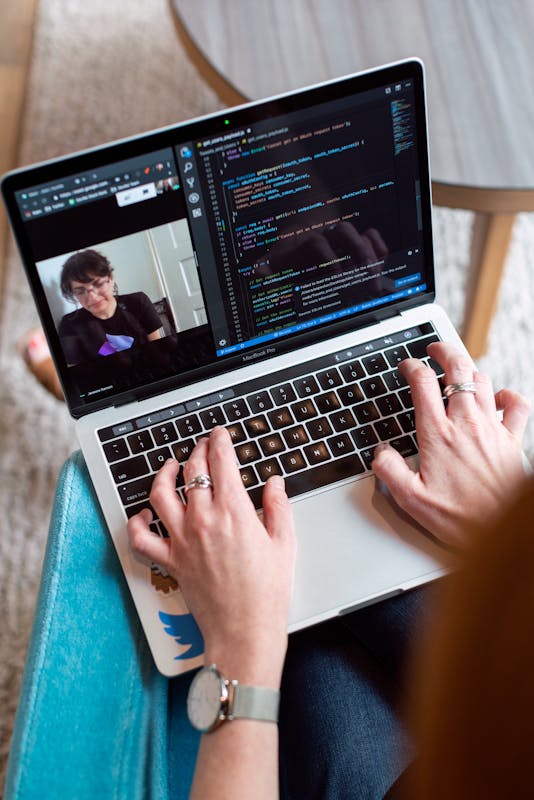
Engineer
AI helps: summarize requirements, draft documentation, generate ideas quickly.
Future changes: more verification, testing, and review rather than only writing.
Human skills: critical thinking, safety responsibility, real-world judgment.

Doctor
AI helps: summarize patient history, support triage, draft notes.
Future changes: stronger privacy rules, more double-checking AI suggestions.
Human skills: empathy, ethics, clinical decision-making under uncertainty.

Caring jobs (bias & constraints)
Observation: "caring" often makes AI suggest only health/education roles.
Change: adding "balanced across different fields" gives a broader list (e.g., HR, customer success, UX accessibility).
Human skills: fairness, awareness of stereotypes, making balanced choices.

6 Jobs for a caring person
- Nurse
- Teacher
- Social Worker
- Counselor / Therapist
- Occupational Therapist
- Veterinary Assistant
Bias observed: the list focuses mostly on health/education roles.

Balanced list across different fields
- UX Research (tech)
- HR (business)
- Emergency Dispatcher (public safety)
- Patient Advocate (health system navigation)
- Sustainability Consultant (environment)
- Accessibility Specialist (tech & inclusion)
Result: adding constraints increased diversity and reduced stereotypes.
AI Tools Used

Tool #1 — ChatGPT
- Ease of use: fast conversational drafting and structure suggestions.
- Technology: LLM (Large Language Model) that generates text from prompts.
- Reliability: very useful for drafts, but requires human review for accuracy.

Tool #2 — Google Gemini
- Ease of use: good for alternative wording and shorter versions.
- Technology: LLM (Large Language Model) that generates responses based on learned patterns.
- Reliability: good for comparison, still needs verification and editing.

How we used both tools
We drafted content with ChatGPT → asked Gemini for a shorter/clearer alternative → compared results → edited manually for clarity, fairness, and consistency.
Process
- Define the website goal and required sections (Task, Jobs, AI Tools, Process, Final Output, Reflection).
- Write prompts for each job and compare ChatGPT vs. Gemini outputs.
- Identify bias patterns and test constraints (e.g., "avoid stereotypes", "balanced across fields").
- Summarize the results in a short structure (AI helps / future changes / human skills).
- Build the one-page website with HTML and CSS (navigation, cards, responsive layout).
- "Describe an engineer in 3 sentences."
- "Describe a doctor at work in 3 sentences."
- "Suggest 6 jobs for a person who is caring."
- "Make the list balanced across different fields and avoid stereotypes."
Final Output
The final output is a one-page HTML/CSS website. It includes a clear navigation menu and sections for the task, job examples, AI tools used, our process, and a short analysis/reflection. The design uses cards and a responsive layout to keep the content readable on different screen sizes.
Analysis
This project shows how prompt design affects output quality and bias.
What worked well: The website is clear, organized, and easy to navigate. The job cards present AI support, expected changes, and essential human skills in a consistent format.
Key insight: Small prompt changes (adding constraints like "balanced across fields") can reduce bias and produce more diverse results.
Limitations: AI outputs can reflect stereotypes or missing context, so human review is needed for accuracy and fairness.
What we would improve: Add more visuals/icons, include more job examples, and add citations if we mention specific job statistics or factual claims.
Reflection
Advantages
- Faster writing and idea generation
- Better structure and consistency
- Easy to get alternative versions (shorter / clearer)
Disadvantages
- Answers can be too general
- Possible factual mistakes ("hallucinations")
- Bias/stereotypes can appear without careful constraints
What we learned
Clear prompts + constraints improve the quality and fairness of AI outputs, but human review is still essential.